
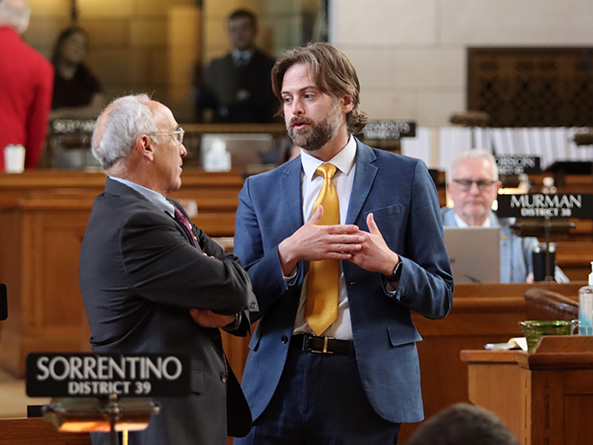
Insurance coverage for certain pediatric disorders clears first round
Lawmakers amended and advanced a bill from general file March 31 that would require Nebraska insurers to cover treatments for two related pediatric autoimmune disorders that manifest as mental health disorders.

LB762, sponsored by Lincoln Sen. George Dungan, would require coverage for an array of treatments for pediatric acute-onset neuropsychiatric syndrome (PANS) and pediatric autoimmune neuropsychiatric disorder associated with streptococcal infections (PANDAS), a subset of PANS.
Dungan said the related disorders, commonly known as PANS/PANDAS, impact a child’s autoimmune system and are characterized by the sudden onset of a number of troubling behavioral issues such as obsessions and compulsions, extreme anxiety, behavioral aggression, mood disorders, urinary symptoms and sleep disorders.
While PANS/PANDAS is a recognized clinical diagnosis, Dungan said, the disorders are rare enough to remain misunderstood by many in the health care and insurance fields.
Dungan said LB762 is important because the last resort when all other treatments have failed is intravenous immunoglobulin, or IVIG, which costs roughly $15,000 per treatment. With early and appropriate care, many children can experience significant improvement or even remission without IVIG, he said, but if left untreated, inflammation can persist, causing long-term neurological and psychiatric issues.
“We have an opportunity here, colleagues, to pass a bill that truly helps people,” Dungan said. “The [number] of people it’s going to help is relatively small, compared to other bills that we maybe see sometimes with tax credits and things like that, but the families that need this help, they need it dearly.”
As introduced, the bill also would require an annual report to the state Department of Insurance that includes the number of times the insurance policy denied coverage for treatment of PANS/PANDAS and which specific treatment was denied.
A Banking, Commerce and Insurance Committee amendment would replace the bill with a modified version of the proposal. The amendment would remove the reporting requirement, but would retain legal definitions for PANS/PANDAS and establishment of a framework for diagnosis and treatment.
Under the amendment, treatments required by the bill’s mandate must be recommended by the patient’s licensed physician, and the proposal would take effect Jan. 1, 2027.
Sen. Kathleen Kauth of Omaha supported the bill, which she called a “fiscally conservative” proposal that would benefit both families dealing with the disorder and the state as a whole.
Kauth said a friend’s family went through years of “trial and error” treatments based on what their insurance would cover before their son was able to receive IVIG for PANS/PANDAS. Those six infusions cost between $15,000 and $20,000 each, she said, and likely could have been avoided with earlier interventions.
“It took a while because it had gone on so very long,” Kauth said. “We’ll never understand exactly how he would have turned out had he not had constant hospitalizations … and in-patent psychiatric care because of how this was impacting him.”
Also supporting LB762 was Gering Sen. Brian Hardin. He called the bill “a no-brainer” because of how much more expensive PANS/PANDAS treatment is if delayed and how few children — approximately 10 each year in Nebraska — are diagnosed with the disorder.
“I think this is the right thing to do at this time, not only for the financial reasons but in terms of helping to end suffering,” Hardin said.
Sen. Mike Jacobson of North Platte, chairperson of the committee, cautioned senators about the possible long-term fiscal implications of the proposal.
While LB762 does not have any immediate General Fund impact, he said, insurance companies could make a case for “defrayment” — a provision under which states, rather than insurance companies, must pay the cost of mandates that exceed those provided in the federal Affordable Care Act.
Elmwood Sen. Robert Clements echoed those concerns in his opposition to the proposal, saying he could not vote for an insurance mandate, especially if it could result in the state ultimately defraying the cost of coverage.
Dungan said other states with similar laws have indicated that attempts by insurers to seek defrayment have rarely been successful. In addition, he said, the potential cost to insurance companies won’t be known for several years and could be addressed by lawmakers in the future if it becomes an issue.
“The reality of the situation is that we have people here today … who need this treatment,” Dungan said.
After adopting the committee amendment 46-0, senators advanced LB762 to select file on a 45-2 vote.

