
Bill would require asthma inhaler insurance coverage
The Banking, Commerce and Insurance Committee heard testimony Feb. 24 on a bill that would require insurance coverage of maintenance and rescue asthma inhalers.

Under LB971, sponsored by Omaha Sen. Dunixi Guereca, coverage would be provided for one form of each type of inhaler, not subject to a deductible, copayment, coinsurance or other cost-sharing arrangement. The bill would not apply to policies that provide coverage for a specified disease or other limited benefit coverage.
For high-deductible plans, such coverage could be subject to the plan’s annual deductible if application of the requirement would result in ineligibility for a health savings account.
Guereca said there is no cure for asthma, but most individuals can manage the disease with regular use of a maintenance inhaler to prevent symptoms and a rescue inhaler for acute episodes. Coverage for both, he said, would increase patients’ ability to manage their disease and reduce emergency room visits and hospitalizations.
An amendment brought by Guereca to the hearing would specify that children younger than 12 would receive a metered-dose inhaler and a spacer — a holding chamber that slows down the spray of medication and helps it reach the lungs more effectively.
“Asthma disproportionately impacts children, working families and communities [that are] exposed to environmental triggers,” Guereca said. “Ensuring access to inhalers is crucial to advancing health equity and supporting evidence-based management of chronic diseases.”
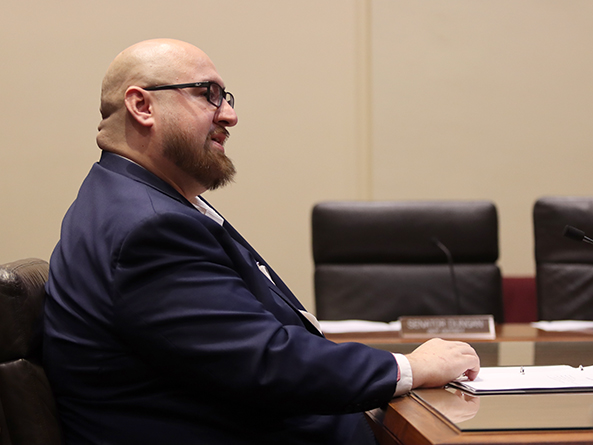
Casey Burg, chief of pulmonology at Children’s Nebraska, a pediatric specialty health center, supported the bill. Asthma is the leading chronic disease among children in the state, he said, adding that those children often end up in the hospital’s emergency department due to lack of consistent, affordable access to their prescribed inhalers.
For example, Burg said, a two-year-old from a rural Nebraska community recently was admitted after his parents cut his inhaler dosage in half to try to reduce treatment costs that they could not afford.
“The result was a pretty preventable medical catastrophe,” he said. “This toddler ended up spending three days in a hospital on IV steroids, oxygen and around-the-clock breathing treatments. The child’s life was at risk because their parents couldn’t bridge that $20 gap.”
Also testifying in favor was Micheal Dwyer, a 42-year volunteer EMS provider. Treating children with breathing difficulties is one of the hardest parts of the job, Dwyer said, and LB971 would provide a narrow insurance coverage mandate to help Nebraska children maintain their health.
Jeremiah Blake, testifying in opposition on behalf of Blue Cross Blue Shield of Nebraska, said putting coverage mandates in state law makes it harder for insurance providers to adjust their coverage as standards of care and products evolve.
In addition, Blake said, the bill’s cost-sharing prohibition would result in a small fiscal impact to plan sponsors.
The committee took no immediate action on LB971.
