

Retention, hiring incentives for merging businesses approved
Lawmakers passed a measure April 10 intended to incentivize major companies to stay and grow in Nebraska after a merger.
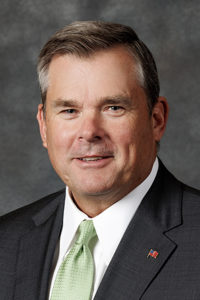
LB1165, introduced by Elkhorn Sen. R. Brad von Gillern on behalf of Gov. Jim Pillen, creates the Grow the Good Life Act.
Under the proposal, a qualifying large employer that merges with an out-of-state company will receive tax credits of up to $50 million over 10 years if it retains its headquarters and most of its base year employees in Nebraska.
The bill also creates a grant program to help with employee retention and recruitment during a business merger and allows companies to use ImagiNE Nebraska Act credits to pay up to 50% of employees’ child care costs.
Additionally, LB1165 increases credit percentages for companies that meet certain job creation and investment thresholds under the ImagiNE Nebraska Act.
During select file debate April 7, von Gillern introduced an amendment that he said reduced the measure’s cost by applying those credit enhancements only to future projects, not existing ones.
Under the bill, the credit percentages will increase by an additional point if a qualifying large employer hires 500 or more full-time employees within seven years of a merger. New employees must be paid an average annual wage of at least $100,000.
Originally, for the increased percentages to apply, new employees would have to have met certain residency requirements.
Von Gillern’s amendment struck those provisions. He said the change ensures that Nebraska residents may qualify as new employees for purposes of the credit bonus.
LB1165 also allows the state Department of Economic Development to use the Site and Building Development Fund to award grants to an employer for capital improvements related to employee retention and recruitment.
Under von Gillern’s amendment, grants may be used for capital improvements made during the two-year period prior to a merger through the end of the fiscal year in which the grant was received.
The department also may award grants or interest-free loans to certain first class cities that have been affected by a “sudden and significant private-sector entity closure or downsizing.” A grant may be used to acquire land, infuse infrastructure or otherwise prepare large sites and buildings for industrial development.
Both types of grants are limited to $2.5 million per year for two fiscal years.
After adopting von Gillern’s amendment on a vote of 33-0, senators advanced LB1165 to final reading by voice vote.
Also included in the bill are provisions of LB1191, sponsored by Sen. Bob Hallstrom of Syracuse, and LB1192, introduced by Lincoln Sen. Jason Prokop.
Under Hallstrom’s measure, companies with active agreements to receive tax incentives under Tier 6 of the Nebraska Advantage Act have up to nine years rather than six to meet required employment and investment levels.
For the extension to apply, a company must make a one-time election and pay a $90,000 fee. The provision applies only to projects approved on or after Dec. 1, 2020.
Under Prokop’s measure, facilities with seating capacities of greater than 16,000 seats located in primary class cities are eligible for assistance under the Convention Center Facility Financing Assistance Act. Lincoln is the state’s only primary class city.
The state Department of Revenue estimates that LB1165 will reduce state General Fund revenue by $4 million in fiscal year 2026-27 and $5.7 million in FY2027-28.
The measure passed April 10 on a vote of 42-7 and takes effect immediately.

