
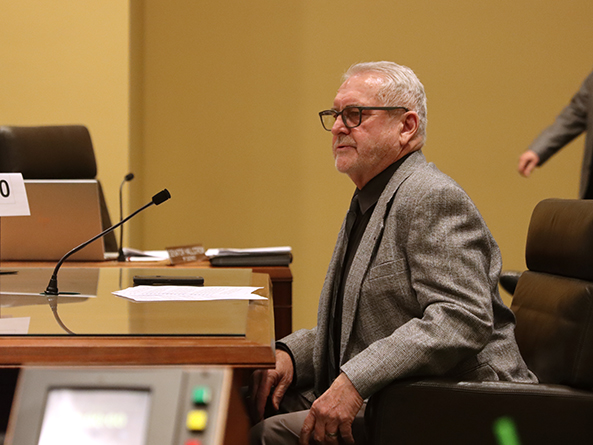
Protections considered for faith-based child services agencies
The Judiciary Committee heard testimony Feb. 25 on a measure that would bar the state from penalizing faith-based child placement agencies for declining to provide services that conflict with their religious beliefs.

LB1060, introduced by Glenvil Sen. Dave Murman, would prohibit state government, agencies and political subdivisions from taking adverse action against such an agency for declining services. Prohibited adverse actions would include:
● denying or canceling funding, contracts or licenses;
● initiating enforcement actions; or
● altering terms of participation in government programs.
An agency that alleges a violation of the prohibition against discrimination could raise the claim as a defense in an administrative or judicial proceeding.
Under the bill, agencies that decline to provide a child-placement service would be required to provide the requester with contact information for other agencies or a link to a state website listing providers that can offer the service.
Murman said that while he is not aware of any current conflicts in Nebraska, disputes in other states have demonstrated a need for statutory protections. He said a Christian adoption agency in New York was threatened with closure for placing children with married, opposite-sex couples only.
When governments pressure agencies out of existence, he said, it leaves fewer placement options overall and places greater strain on other agencies.
“The more child-placing agencies we have, both religious and nonreligious, there is less pressure on any individual agency,” Murman said, “which ultimately allows the system as a whole to thrive.”
Lance Kinzer testified in support of the bill on behalf of the 1st Amendment Partnership, saying Nebraska has more than 30 child-placement agencies, including about 10 that are faith-based. Maintaining that mix strengthens the overall system by encouraging broader community participation and expanding the pool of families available for foster care and adoption placements, Kinzer said.
Representing the Nebraska Catholic Conference, Tom Venzor also supported the measure. He said the state should value and honor the mission of faith-based foster care and adoption agencies so that they can continue serving children without fear of discrimination or costly litigation.
“LB1060 provides important, up-front statutory protection … so Nebraska can continue to rely on a diverse array of service providers to meet the demanding needs of serving Nebraska’s children,” Venzor said.
Katie Nungesser opposed the bill on behalf of Voices for Children in Nebraska. Child welfare policy should prioritize children’s best interests, safety, stability and timely permanency, she said, rather than protections for agencies.
Additionally, she said, LB1060 lacks safeguards to prevent placement delays or discrimination, which could reduce options for vulnerable children — including LGBTQ youth and those in rural areas — and prolong the time that more than 4,000 Nebraska children already spend in out-of-home care.
“Children are going to pay the price when adult belief systems limit the pool of safe and loving homes available to them,” Nungesser said. “Fewer placement options mean longer waits, greater instability and higher risk of disruption.”
The committee took no immediate action on the proposal.

