
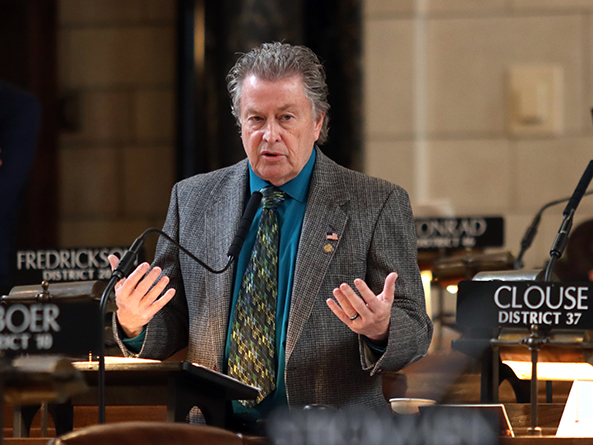
Electrical licensing penalty measure amended, advanced
A proposal intended to increase criminal penalties for certain violations of the State Electrical Act cleared the first round of debate March 17.

Under LB889, introduced by Kearney Sen. Stan Clouse, certain violations of the State Electrical Act would be elevated from a Class I misdemeanor to a Class IV felony, including:
● failing to file a required request for inspection;
● performing electrical work for another without the proper license;
● interfering with or refusing entry to a lawfully acting electrical inspector;
● making a false statement in a license application, inspection request, certificate or other required form; and
● failing or neglecting to comply with the act or any lawful rule, regulation or order of the State Electrical Board.
A Class IV felony is punishable by up to two years imprisonment and 12 months post-release supervision, a $10,000 fine or both.
Clouse said he brought the measure to deter fraudulent activity and encourage prosecution.
Current penalties rarely are enforced due to county attorney backlogs and limited incentives to pursue misdemeanor cases, he said, leaving consumers without adequate recourse when unlicensed work results in safety risks or financial harm.
A Judiciary Committee amendment, adopted 27-2, replaced the bill with a modified version of the proposal that would limit the unlicensed work violation to paid electrical work. It also would create an exception for unlicensed electrical work performed by an individual for certain family members.
Sen. Carolyn Bosn of Lincoln, committee chairperson, said the amendment was developed in response to concerns raised during the public hearing on LB889 that the original bill could unintentionally criminalize unpaid or casual electrical assistance.
Speaking in opposition to the proposal, Lincoln Sen. Danielle Conrad said expanding criminal penalties is not the appropriate way to address a consumer protection issue. Existing laws, including misdemeanor penalties and broader fraud statutes, already cover such conduct, she said.
Additionally, Conrad said, the measure could contribute to mass incarceration and senators should avoid creating new criminal penalties without clear justification.
“Every expert that’s looked at the Nebraska sentencing structure has said stop digging — stop creating new penalties and offenses,” she said.
Sen. John Cavanaugh of Omaha also spoke in opposition to LB889. He said the reluctance of county attorneys to prosecute misdemeanor cases is insufficient grounds for elevating an offense to a felony.
Increasing penalties should be based on the seriousness of the crime, he said, not on making prosecutions more convenient.
After adoption of an additional technical amendment, lawmakers advanced LB889 to select file on a 27-7 vote.

