
Bill would require insurance coverage for certain pediatric disorders
The Banking, Commerce and Insurance Committee heard testimony Feb. 17 on a bill that would require Nebraska insurers to cover treatments for two related pediatric autoimmune disorders.

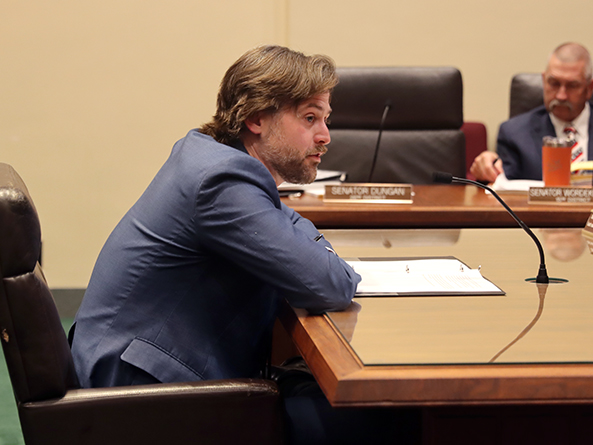
LB762, sponsored by Lincoln Sen. George Dungan, would require coverage for an array of treatments for pediatric acute-onset neuropsychiatric syndrome (PANS) and pediatric autoimmune neuropsychiatric disorder associated with streptococcal infections (PANDAS).
Dungan said the related disorders, commonly known as PANS/PANDAS, impact a child’s autoimmune system and are characterized by the sudden onset of a number of troubling behavioral issues such as obsessions and compulsions, extreme anxiety, behavioral aggression, mood disorders, urinary symptoms and sleep disorders.
While PANS/PANDAS is a recognized clinical diagnosis, Dungan said, the disorders are rare enough to remain misunderstood by many in the health care and insurance fields.
Dungan said LB762 is important because the last resort when all other treatments have failed is intravenous immunoglobulin, or IVIG, which costs roughly $15,000 a month. The treatment can be needed for up to eight months, he said, at a cost that could bankrupt a family if not covered by insurance.
“With early and appropriate treatment, many children can experience significant improvement or even remission,” Dungan said. “However, if left untreated, the inflammation can persist, causing long-term neurological and psychiatric issues.”
The bill also would require an annual report to the state Department of Insurance that includes the number of times the insurance policy denied coverage for treatment of PANS/PANDAS and which specific treatment was denied.
Phil Boucher, a Lincoln pediatrician, testified in support of the proposal. He said he has treated many children dealing with PANS/PANDAS, which typically starts with an attempt to reduce inflammation through a variety of means, including steroids.
Boucher said approximately 10% of children with the disorders need intravenous immunoglobulin to recover, however, and insurance coverage of IVIG is inconsistent. IVIG is FDA approved, he said, and several randomized trials have shown it to be effective in decreasing or alleviating PANS/PANDAS symptoms.
“It’s certainly safe and effective,” Boucher said. “It’s not the first line [of treatment] but for children who need it, it is life changing and life altering in the trajectory of their disease course.”
Nearly a dozen parents of children with PANS/PANDAS and young people diagnosed with the disorders also testified in support of LB762.
Elizabeth Fandl said her daughter’s life has been “profoundly” impacted by a delayed PANS diagnosis. IVIG has improved her condition, she said, but the family has had to “fight every six months” for coverage of the procedure by their insurance company, even with detailed documentation from her daughter’s medical team.
“We urgently need improved awareness, access and insurance coverage for evidence-based PANS care,” Fandl said. “You have the power to stop [the] suffering for these children, like 20 other states have.”
Also speaking in favor was Grace Troupe, who said she has two daughters with PANS/PANDAS, ages 8 and 10. One child was approved for IVIG and one was denied, she said, adding that treatment decisions often depend on whether the provider reviewing a case is familiar with the disorders or not.
No middle-class family can afford to pay $15,000 out-of-pocket monthly for IVIG, Troupe said, and delayed treatment can lead to long-term disabilities and the care needs that accompany them.
“Please don’t make us wait another year,” she said. “A year is everything to us.”
Jeremiah Blake testified in opposition to LB762 on behalf of Blue Cross Blue Shield of Nebraska. He said the company recognizes PANS/PANDAS as a valid diagnosis and covers many of the treatments referenced in the bill when medically necessary.
They do not cover IVIG for PANS/PANDAS, however, because research does not support its wide use as a treatment for the disorders, Blake said. In addition, he said, premiums are based on costs and all Nebraska families currently are facing a health care affordability crisis.
“[Our] opposition to LB762 is grounded in the principle that plan design should be driven by clinical evidence while being mindful of how these decisions affect the cost of insurance,” Blake said.
The committee took no immediate action on LB762.

