
Bill would eliminate reduced-price school meal fees
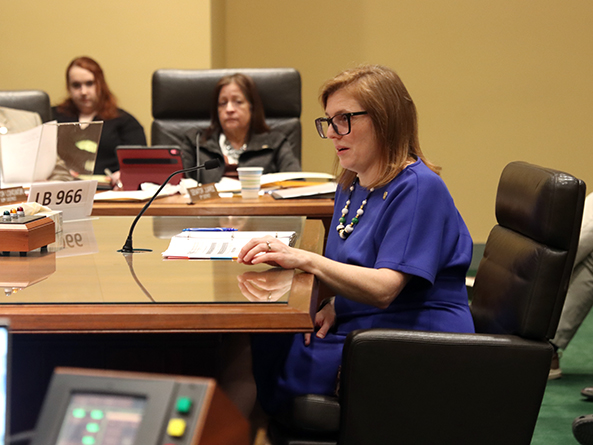
A measure aimed at making school breakfast and lunch free for students who currently pay reduced prices was considered by the Education Committee Feb. 17.

LB966, introduced by Omaha Sen. Machaela Cavanaugh, would adopt the Hunger-Free Schools Act and require the state Department of Education to reimburse schools for part of the cost of serving students who qualify for reduced-price meals under federal guidelines.
Under the bill, the state would cover the difference between the federal reimbursement rate for a free meal and the lower rate for a reduced-price meal. This would allow schools to provide those meals at no cost to eligible students, eliminating the reduced-price fee that families currently pay.
Cavanaugh said many families, especially those with multiple children, struggle to afford reduced-price lunches. She described LB966 as a focused, lower-cost alternative to her previous universal free school meal proposals.
“This fiscal note is $1.2 million, and it’s significantly less than a full reimbursement program, but it at least will help those families that qualify for reduced lunch,” Cavanaugh said.
Tim Royers testified in support of LB966 on behalf of the Nebraska State Education Association. Hunger creates significant academic and behavioral challenges for students, he said, and can lead to a lack of concentration, disruptive behavior, lower academic achievement and more frequent illnesses.
“This bill represents a modest, targeted step forward in our mission to improve our ability to ensure that no child goes hungry in Nebraska,” Royers said.
Representing the Omaha Education Association, Kathy Poehling testified in support of the measure. The cost of reduced-price meals can add up quickly, she said, exceeding $200 to $300 per school year for a family of four living paycheck to paycheck.
“This bill provides immediate breathing room for working-class families who are struggling with the rising cost of groceries and housing,” Poehling said.
Anahí Salazar of Voices for Children in Nebraska also spoke in favor of the bill. She said 105,000 Nebraska households were food insecure in 2023 — up 8,000 from the previous year and close to the state’s 2011 peak of 112,000.
With food insecurity on the rise, Salazar said, LB966 would support children’s health and learning readiness by helping families who are on the cusp of poverty to access meals.
No one testified in opposition to the bill and the committee took no immediate action on it.

