
Stricter penalties proposed for burn permit violations
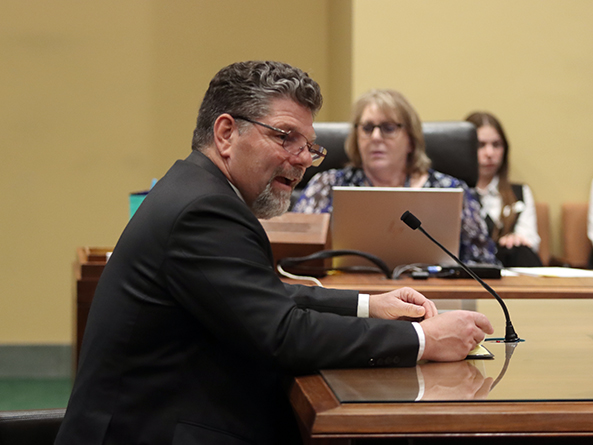
A measure aimed at strengthening Nebraska’s open burn laws was discussed by the Judiciary Committee Feb. 11.

Under LB897, introduced by Hastings Sen. Dan Lonowski, municipalities and rural and suburban fire departments could charge individuals a fee to cover the cost of extinguishing a fire caused by a violation of burn permit requirements. The bill also would raise the penalty for violating burn permit rules from a Class IV to a Class III misdemeanor.
At the hearing, Lonowski offered an amendment to clarify that any cost recovery for extinguishing a fire would be handled as a civil special assessment against the property, not as part of a criminal penalty, and would follow existing municipal assessment procedures.
Lonowski said Nebraska has seen increasingly severe wildfires in recent years, partly because some landowners burn without permits or after being denied one. LB897 is meant to target those who ignore burn bans and local fire conditions, he said, while sending a stronger message to prosecutors.
“Although [LB897] does not carry an increase in fine threshold or maximum jail sentence, our hope is that it increases the seriousness of the offense when a county attorney decides how to prosecute these crimes,” Lonowski said.
Kenny Krause testified in support of LB897 on behalf of the Nebraska State Volunteer Firefighters Association, saying fire chiefs carefully evaluate weather, fuel types and staffing before issuing burn permits.
He said county attorneys rarely prosecute violations, however, when individuals deliberately burn without permits, which strains the resources of volunteer fire departments. The bill would provide another way to attempt to recover those costs, Krause said.
Ryan McIntosh also testified in support of the measure on behalf of the Nebraska State Volunteer Firefighters Association and the Nebraska Fire Chiefs Association, saying unauthorized burns often demand extensive personnel and resources to contain.
By allowing fire departments to recoup costs when individuals deliberately disregard burn regulations, he said, departments won’t be left shouldering the financial burden for preventable fires.
No one testified in opposition and the committee took no immediate action on LB897.

