
Measure would lower voting age to 16
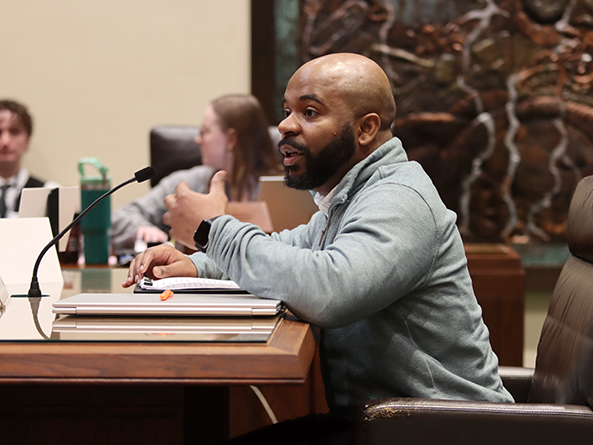
A proposed amendment to the Nebraska Constitution that would lower the state’s voting age to 16 was considered by the Government, Military and Veterans Affairs Committee Jan. 22.
Currently in Nebraska, a citizen who reaches age 18 on or before the first Tuesday after the first Monday in November and has resided within the state, county and voting precinct for the required term is eligible to be an elector for the calendar year in which they have attained age 18.
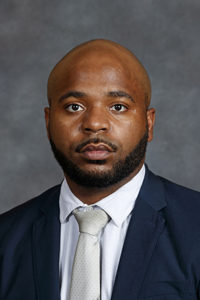
If approved by lawmakers, LR284CA, sponsored by Omaha Sen. Terrell McKinney, would put the question of lowering the voting age to 16 on the 2026 general election ballot.
McKinney said age 16 is when young people begin to make the transition to adulthood and become engaged in activities regulated by lawmakers, such as driving, working and paying taxes. Because of that, he said, several countries allow 16-year-olds to vote, including the U.K., Germany and Greece.
“The purpose of this resolution is to give Nebraskans the option to expand our voting base to younger voters,” McKinney said. “This could increase civic engagement, strengthen civic education and promote lifelong participation in the voting process.”
Lincoln Southeast High School junior Holly Bowen testified in favor of the proposal. Bowen said she will turn 18 in December, just missing the opportunity to participate in the 2026 general election.
As a result, Bowen said, she cannot help choose the individuals who will make policy decisions over the next four years that will greatly impact her life.
“The teens of Nebraska are subject to a government they did not ask for,” she said. “We drive these streets, we work for this community, we attend these schools and we want our voice to be heard.”
Nora Wessel of NEw Voices, a youth-led Nebraska civic engagement organization, also spoke in favor of the measure. She said the proposed amendment would “align civic responsibility with civic power.”
Research shows that becoming involved in civic life at a young age increases the chances that an individual will stay involved in voting throughout their life, she said.
“We believe that democracy is strongest when all voices are included, especially those of young people who are directly affected by decisions made at every level of government,” Wessel said.
Civic Nebraska public policy director Kieran Kissler also testified in support. In countries and communities where similar measures have passed, she said, voter turnout is greater among 16- and 17-year-olds than among those 18 to 21.
No one testified in opposition to LR284CA and the committee took no immediate action on it.

