

Bill would expand municipal election district boundaries
The Government, Military and Veterans Affairs Committee heard testimony Jan. 22 on a measure that would expand voting district boundaries in municipal elections to include extraterritorial zoning jurisdictions.
An ETJ is the area adjacent to a municipality within which cities may apply zoning and building codes and other regulations that impact land use and development. In Nebraska, the area is three miles outside the city limits for metropolitan and primary class cities, two miles for first class cities and one mile for second class cities and villages.
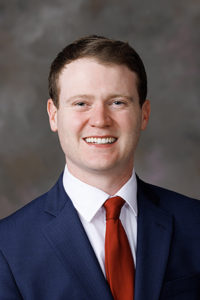
LB951, sponsored by Sen. Beau Ballard of Lincoln, would require ETJs to be included in the district boundaries for municipal elections beginning Jan. 1, 2027.
Ballard said the inability of ETJ residents to vote in city elections amounts to a “form of taxation without representation.” Current law subjects landowners to “indirect” taxation, he said, in the form of permitting and inspection fees, without allowing them to vote for the elected representatives who set those policies.
“LB951 will restore fairness, accountability and participation in the democratic process for thousands of Nebraskans,” Ballard said.
Nebraska Secretary of State Bob Evnen testified in support of the proposal, saying the “fundamental interest of property owners” should be “paramount” when deciding who has the right to choose elected officials.
“This bill will correct what I consider to be an anomaly in that principle in our state,” Evnen said.
Wayne Bena, Deputy Secretary of State for Elections, testified in favor on behalf of the Secretary of State’s Office, but noted practical concerns with the measure.
For example, he said, many small villages in Nebraska have not redrawn their municipal voting districts in decades. He suggested that the bill’s implementation date be extended to accommodate that task.
Also testifying in favor was Luke Wenz of the Platte Institute. He said participation in the political process strengthens legitimacy and trust.
“If a government exercises power upon you, that government should also be accountable to you,” Wenz said.
Mike Rezac, a custom home builder and land developer, also supported LB951. His current residential development is outside the Lincoln city limits but within an ETJ, he said, so the city has “complete authority” over street design, sidewalks, lighting, storm drainage, easements and even tree size and placement.
“Every major decision is controlled by the city,” Rezac said. “When disagreement occurs, there is no independent body to appeal to, no elected officials representing the residents or the property owners affected by these decisions.”
Opposing the measure was Omaha City Attorney Matt Kuhse. Zoning and building regulations are a small part of what cities do, he said, and extending voting rights for city elections to people who don’t live within the city would give them a voice in many matters that don’t impact them.
Kuhse said LB951 would allow ETJ residents who don’t pay city taxes an equal say on bond issues, police and firefighter budgets and more. In addition, he said, the bill raises practical concerns because many ETJs overlap with each other in fast-growing areas of the state like the Omaha metro, creating jurisdictional questions.
Also testifying in opposition was Gretna Mayor Mike Evans, who said nearly 2,700 more people live in the ETJ that surrounds the Gretna city limits than within it and extending municipal voting rights to those residents could lead to “representation without taxation.”
“The people in this ETJ can effectively tell our citizens what to do, how much taxes they pay, and regulate our community without any form of tax payment,” Evans said.
David Cary, director of the Lincoln/Lancaster County Planning Development Services Department, also opposed LB951. ETJs allow cities to plan for thoughtful, efficient growth in ways that best serve both residents of the city and the outlying areas, he said.
ETJ residents have existing means of participating in the political processes that govern them, he said, and can testify at planning committee public hearings and at city council meetings.
The committee took no immediate action on LB951.

