

Increases to senator pay, compensation commission proposed
Two proposed constitutional changes related to Nebraska lawmakers’ salaries, along with a third option, were considered by the Executive Board Feb. 24.
Both measures, if approved by the Legislature, would place proposed constitutional amendments on the 2026 general election ballot. Salaries for Nebraska lawmakers are set in the state constitution and cannot be changed without voter approval.
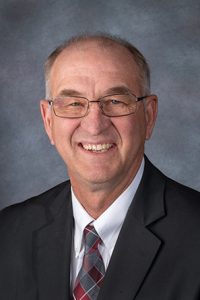
As introduced, LR25CA, sponsored by Blair Sen. Ben Hansen, would set the rate of pay for members of the Legislature at the state’s minimum wage rate, beginning Jan. 6, 2027. It also would require that senators receive health insurance paid by the state with equivalent benefits to those offered by Medicaid in effect at the beginning of the term of the most recently elected members.
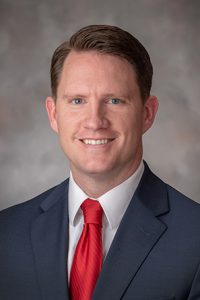
LR7CA, introduced by Sen. Myron Dorn of Adams, would increase state legislators’ salary from $12,000 to $30,000 annually.
Both lawmakers put their support behind a third option, however, offered by Hansen at the public hearing as an amendment to his original proposal. The amendment instead would ask voters to establish an independent compensation commission to determine lawmakers’ salaries, beginning with the 2029 legislative session.
Hansen said the amendment would create a nonpartisan, independent salary commission that would exclude any current or former members of the legislature or their spouses, current or former state or legislative employees, lobbyists, judges or elected officials.
He said 22 other states use a commission method and that the amendment would accomplish the goal of broadening opportunities to serve in the Legislature, while also allowing Nebraskans to take the lead in establishing what senators’ salaries should be.
The current $12,000 salary has not been raised since 1988, Hansen said, yet the cost of living has risen “dramatically” in that time. While some travel miles also are reimbursed, the combination is still less than 20% of Nebraska’s median income, he said.
“Nebraska makes it very difficult for people working normal jobs to be able to represent their communities as a state senator,” Hansen said. “I’d like to see senators from diverse walks of life be able to devote their time to represent people like them.”
Dorn supported Hansen’s amendment. He said his concern is raising salaries to a point where more Nebraskans can serve, not how that goal is achieved. A recent study indicated that Nebraska lawmakers’ workload is close to that of a full-time job, he said, but the current compensation does not reflect that reality.
Dorn said he has spoken to people who would like to run for his seat in two years when he is term limited, but have said that it’s not financially feasible.
“This low pay limits who can consider running for the state legislature,” Dorn said.
Representing Civic Nebraska, Heidi Uhing testified in favor of LR25CA with Hansen’s amendment. She said the current salary level may look like a bargain to some Nebraskans, but it is limiting in important ways.
“The low level of pay means that mostly retired, semi-retired or independently wealthy Nebraskans can even afford to serve,” Uhing said. “An imbalance like this … prevents our state’s policy outcomes from being truly representative of the average Nebraskan’s experience and perspective.”
Jennifer Creager also testified in favor of both measures and the Hanson amendment on behalf of the Greater Omaha Chamber, Lincoln Chamber of Commerce and the Nebraska Chamber of Commerce and Industry.
Nebraska voters are uncomfortable with senators raising their own pay, she said, but polling data also indicates that they “have no idea” how much that pay is. An independent commission might be the best way to address both of those problems, she said.
“The bottom line is we just need to do better about expanding this public service opportunity for people,” Creager said.
Speaking in opposition to both measures was Josephine Litwinowicz, who suggested that any proposal advanced by the committee include a provision that individuals who receive Medicaid continue to receive those benefits as a state senator.
The committee took no immediate action on either proposal.

