
Ethanol board, fuel tax updates clear first round
Lawmakers amended and advanced a measure March 24 aimed at modernizing the structure and funding of Nebraska’s ethanol oversight system.
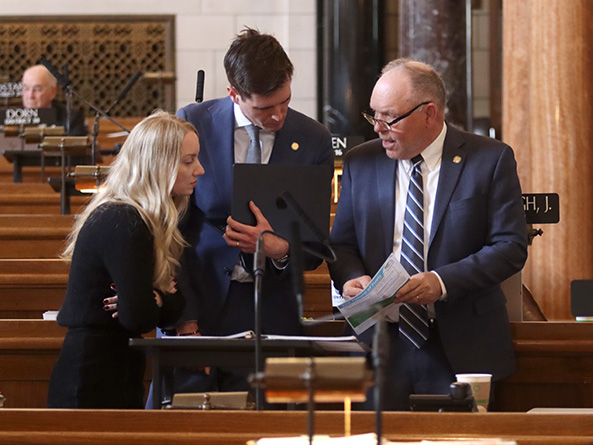
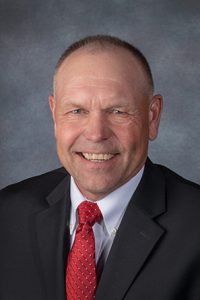
Under LB815, introduced by Plymouth Sen. Tom Brandt, the Nebraska Ethanol Board would expand from seven to nine members to include more ethanol producers and require that an existing business seat be held by a producer beginning Sept. 1. The bill also would update the board’s mission and statutory language in the Ethanol Development Act.
Additionally, the measure would eliminate outdated authorities, such as allowing the board to acquire commodities or accept grain from federal agencies, permit the board to join trade organizations, add a definition for “ethanol producer” and repeal obsolete provisions tied to expired incentive programs.
LB815 also would adjust fuel-related taxes tied to ethanol programs. Beginning Oct. 1, it would impose a quarter-cent per-gallon excise tax on dyed diesel used for off-road purposes, with proceeds directed to the Agricultural Alcohol Fuel Tax Fund. It would update allowable uses of that fund and shift existing fees by removing one on dyed diesel and increasing the fee on clear diesel to 0.6 cents per gallon.
Brandt said the measure would result in only a minimal net cost for agricultural producers while maintaining support for ethanol programs. By replacing an existing fee on dyed diesel with a smaller excise tax and shifting more of the funding responsibility to clear, on-road diesel, he said, LB815 would lower the burden on farmers.
“Overall, the provisions of the bill ensure that the Nebraska Ethanol Board will continue to best serve the ethanol industry, both now and for years to come,” Brandt said.
An Agriculture Committee amendment, adopted 26-0, would change how revenue from the dyed diesel tax is distributed. It would direct the first $140,000 collected each year to the Motor Fuel Tax Enforcement and Collection Cash Fund, with the remainder directed to the Agricultural Alcohol Fuel Tax Fund.
The amendment also would revise the definition of ethanol producer to include individuals who spend at least 50% of their professional time on operational or business management activities at an ethanol production facility.
Sen. Teresa Ibach of Sumner supported the measure, saying the Nebraska Ethanol Board has played a key role in agriculture for more than 50 years through research, market development and policy efforts. She said the industry has become more complex and competitive, making updates to the board necessary.
St. Paul Sen. Fred Meyer also supported the bill. In the 1980s, he said, most corn produced in Nebraska was shipped out of state, but today nearly all of it is used locally. That “complete reversal” was driven by ethanol production, Meyer said, which also supports dozens of high-paying jobs.
Additionally, he said, ethanol plants have spurred economic growth in nearby communities through new housing, businesses and school investment.
“It has been transformational for everyone in those towns,” Meyer said.
Sen. Jared Storm of David City said that while he supports Nebraska’s ethanol industry, he could not support the diesel fuel tax increase contained in LB815. The tax likely would be passed on to consumers, he said, and those directly involved in ethanol production should fund the board, not taxpayers.
Following adoption of the committee amendment, senators voted 28-0 to advance LB815 to select file.

