
Restrictions considered for petition circulators
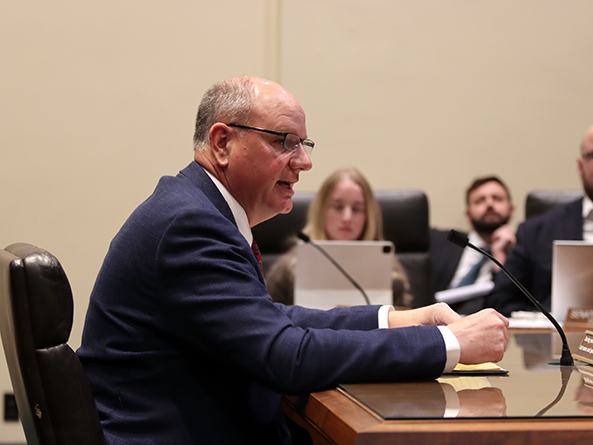
A bill that would create new requirements for petition circulators and sponsors under the Nebraska Election Act was considered by the Government, Military and Veterans Affairs Committee Feb. 4.
Currently, the only criteria for petition circulators in Nebraska is that they be at least 18 years old.
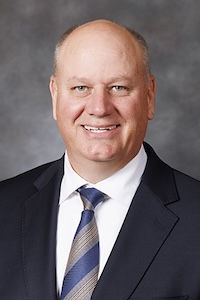
LB1068, sponsored by David City Sen. Jared Storm, would require that all petition circulators be U.S. citizens who have never pled guilty or nolo contendere to, or been found guilty of, a felony or criminal offense involving fraud, forgery or identification theft.
The measure also would require all paid circulators to be subject to a criminal background check by the petition sponsor. Any sheet of a petition circulated by a person who does not qualify as a valid circulator under the bill’s provisions would be invalid.
As introduced, LB1068 also would require circulators to wear an ID badge that includes their name.
Storm said the bill was introduced in response to several situations that occurred in recent election cycles involving initiative petitions sponsors and circulators that resulted in court cases and the invalidation of signatures.
“When we have proof of fraud being committed, the credibility of the remaining signatures is damaged,” he said. “Overall, I believe we need to maintain the integrity of the petition process.”
Storm brought an amendment to the hearing to replace the measure with a modified version in an attempt to remove the bill’s fiscal impact. The amendment would remove the badge requirement and a provision requiring petition sponsors to file circulator lists with the secretary of state’s office.
He said the secretary of state’s office indicated a need to hire an additional employee to carry out the administrative tasks associated with those provisions of LB1068.
Instead, the amendment would require petition sponsors to maintain lists of the names of circulators who would be handling more than 25 petition sheets and make the list available within four days of a request from either the secretary of state’s office or the attorney general’s office.
Wayne Bena, deputy secretary of state for elections, testified in favor of the proposal on behalf of Nebraska Secretary of State Bob Evnen. He said the office likely could absorb the bill’s costs without additional appropriations with Storm’s amendment attached.
The overall measure would provide reasonable guardrails for the initiative process, he said.
“This is just another step to say that the sponsors of a petition need to take responsibility for their circulators and to make sure that they are following the rules,” Bena said. “And then, if they’re not, we’d be able to identify who they are so there could be a proper investigation.”
Spike Eickholt testified in opposition to LB1068 for the ACLU of Nebraska. The right to petition the government is the first power reserved to the people in the Nebraska Constitution, he said, and should not be limited without good reason.
He said the measure would not address what happened in 2024 involving problems with the medical marijuana initiatives and the lawsuit that followed. None of those irregularities involved circulators who weren’t U.S. citizens or had been convicted of felonies, he said.
“I understand [the] point that there should be integrity in the process,” Eickholt said, “[But] I know a lot of people with clean records who aren’t trustworthy … I think a criminal conviction, even for a felony, is not really determinative of whether a person is honest.”
Also opposing the bill was Mike Gage, speaking on behalf of Affiliates of the Nebraska State AFL-CIO and the Nebraska Farmers Union. He said past successful initiatives in several states have prompted legislators to add new requirements making the petition process more difficult.
The stipulations in LB1068 could “scare away people,” Gage said, in part because volunteer petition circulators may not want to reveal a felony conviction in their distant past. In addition, he said, being a petition circulator might be the only way that someone who isn’t a citizen yet can legally participate in the democratic process since they can’t vote.
“Working people and family farmers should not have fewer tools of democracy simply because popular initiatives succeed,” Gage said.
The committee took no immediate action on the bill.

