

Changes to local tax asking cap proposed
The Revenue Committee heard testimony March 5 on proposed updates to a measure passed during last year’s special session that limits increases in city and county property tax request authority.
Under the current Property Tax Growth Limitation Act, the preliminary property tax request authority of a city, county or village is the amount of property taxes levied in the prior fiscal year, minus any exceptions allowed under the act. The cap goes into effect for fiscal years beginning on or after July 1, 2025.
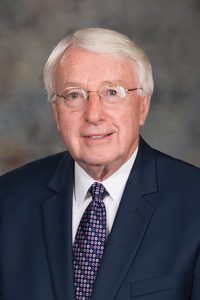
Ralston Sen. Merv Riepe, sponsor of LB242, said the proposal is intended to make the law “workable” for cities and counties, many of which are preparing their budgets for the upcoming fiscal year.
Current law allows cities and counties to carry forward unused property tax authority to future budget years. Accumulation of unused authority cannot exceed an aggregate of 5% of the total property tax request authority from the prior year.
Riepe said LB242 includes a provision to help cities and counties — which currently are subject to a lid on restricted funds, including property taxes — transition to the new method.
The bill would allow cities and counties to convert their accumulated amount of unused restricted funds authority as of June 30, 2025, into unused property tax request authority for fiscal years beginning on or after July 1, 2025. The amount converted could not exceed 5% of the total property taxes levied by the political subdivision in 2024.
Current law allows cities and counties to increase their property tax request authority by amounts needed for emergencies, budgeted for public safety services or approved by voters, among other exceptions.
LB242 would create additional exceptions for amounts budgeted for substance abuse prevention, behavioral health and opioid use prevention; matching state and federal grants; and replacing prior revenue streams eliminated or reduced through legislative action.
In addition to their preliminary property tax request authority, current law allows cities and counties to increase their property tax request authority by the product of two factors:
• the prior year’s amount of property taxes levied increased by a percentage that accounts for total property valuation growth due to new construction, improvements and certain other changes, minus any exceptions used; and
• the greater of zero or the annual percentage change in a price index that tracks state and local government expenses.
Riepe said LB242 would modify the formula to ensure that it accounts for growth, as intended by the Legislature when it passed the special session bill.
Lynn Rex testified in support of the bill on behalf of the League of Nebraska Municipalities. She said the current formula fails to work as intended because it does not allow cities and counties to increase their preliminary property tax request authority when inflation is 0% or less.
She said the change is “really, really important” for the state’s growing municipalities, including Gretna, Lincoln and Omaha.
LB242 also would repeal current limits on the amounts municipalities can collect from local occupation taxes, which Rex said was the Legislature’s intent when it passed LB34 last year.
“What we were informed as we were working on LB34 is that those restrictions would be taken away,” she said.
La Vista Mayor Douglas Kindig also testified in support. The city currently may collect up to $700,000 per year from its 1% occupation tax on restaurants, he said, but estimates show that it could generate an additional $650,000 per year over the next decade if the revenue cap were removed.
“Removing this cap will allow for us to capture the revenue from the growth of the tourism industry without financially impacting our residents,” Kindig said, “and it will allow us to replace the revenue lost with the current property tax growth limitations.”
No one testified in opposition to the bill and the committee took no immediate action on it.

