
Bill would target fraudulent social media ads
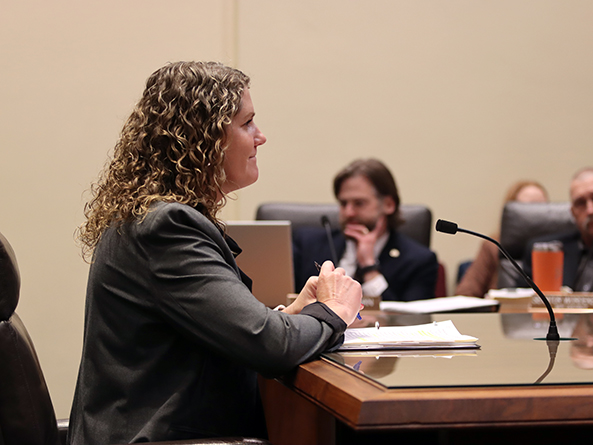
The Banking, Commerce and Insurance Committee heard testimony Feb. 10 on a measure that seeks to hold accountable social media platforms that accept paid advertising.

LB1118, sponsored by Sen. Carolyn Bosn of Lincoln, would update the state’s Uniform Deceptive Trade Practices Act to treat certain conduct by social media platforms that accept paid advertising as a deceptive trade practice.
A fraudulent advertisement is defined as one that misrepresents material facts or unlawfully impersonates another in order to induce a transaction or extract a benefit. A platform that knowingly permits fraudulent advertising or ignores credible reports would be guilty of a deceptive trade practice.
Bosn said deceptive advertising is “everywhere” online and often targets and exploits seniors, young people and those who are in financial distress. Enforcement gaps have emerged in the fight against this type of fraud, she said, because existing consumer protection laws weren’t designed to guard against it.
“These ads don’t just waste people’s money, they cause real harm,” she said.
Bosn said social media platforms use sophisticated algorithms to target users, and those same systems easily could be used to target fraudulent advertisers. LB1118 would provide clear expectations, accountability and an incentive for social media platforms to go after bad actors, she said.
Under the bill, a platform that accepts any form of compensation or thing of value for advertising would be in violation for failure to establish and implement the following:
• identity verification for advertisers;
• an unlawful impersonation detection and mitigation program;
• automated and manual fraud detection systems;
• measures to prevent repeated offenses by the same advertiser;
• a clear and conspicuous tool for users to report suspected fraud; and
• a process for law enforcement to report suspected fraudulent advertisements.
The measure also would require platforms, within seven days, to investigate and determine if a reported ad is fraudulent and remove it from the platform.
Paul Benda, executive vice president for risk, fraud and cybersecurity at the American Bankers Association, testified in favor of the proposal. He said online scams have cost many people their life savings and that social media platforms must do more to protect their users because banks cannot fight fraud alone.
For example, he said, up to 10% of Meta’s revenue, over $16 billion, can be linked to scam ads.
“Unless every player in the fraud ecosystem accepts their responsibility, the criminals will continue to victimize America on an unprecedented scale,” Benda said.
Also speaking in favor of LB1118 was Joyce Beck. Testifying on behalf of AARP Nebraska, she said many fraudulent ads target older Americans and often remain online even after they’ve been reported, continuing to deceive others.
For example, she said, the Federal Trade Commission reports that fraud losses among those 60 and older quadrupled from 2020 to 2024, rising from $600 million to $2.4 billion — with those originating on social media accounting for the most significant losses.
“Gaps in advertising verification and platform oversight have allowed fraudulent, impersonation-based ads to flourish, causing devastating financial and emotional harm,” Beck said.
Megan Stokes, representing the Computer and Communications Industry Association, testified in opposition. She said social media platforms take fraud seriously by investing heavily in protecting users, working closely with law enforcement and financial platforms and removing millions of pieces of harmful content each year.
By not allowing enough time for platforms to complete thorough investigations into fraud reports, Stokes said, LB1118 could harm legitimate businesses and advertisers and limit consumer access to lawful products.
In addition, she said, online fraud is an interstate problem that would best be addressed through coordinated federal action that also involves banks and payment processors.
“Targeting a narrow slice of online advertising will not stop bad actors,” Stokes said, “It will simply push them elsewhere.”
The committee took no immediate action on the proposal.

