

Offsite religious instruction for students proposed
The Education Committee heard testimony March 3 on a measure that would excuse public school students to attend religious instruction courses, a practice commonly referred to as released time religious instruction, or RTRI.
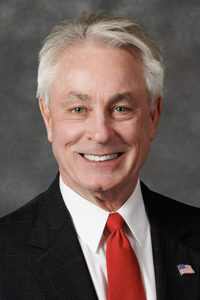
LB550, introduced by Central City Sen. Loren Lippincott, would require school districts to implement a policy by July 1, 2025, that allows students to attend religious instruction off school property for at least one class period each week.
Under the bill, parents, guardians or educational decision-makers must provide written consent for students to attend RTRI. Additionally, the sponsoring entity offering religious instruction would be required to maintain attendance records and provide them to the district the student attends.
Sponsoring entities would be legally liable for students while attending RTRI and parents, guardians, educational decision-makers or sponsoring entities would be responsible for transporting students to and from religion courses.
School districts could adopt policies to allow students to earn academic credit for completing a religious course and, other than minor administrative costs, district funds could not be expended for religious instruction.
Lippincott said offering students the opportunity to attend religious instruction would help them develop a strong sense of morality and work ethic, while also helping to decrease student truancy and behavioral issues.
“If students are allowed this additional educational opportunity, the positive outcomes for students would aid in reducing the time that teachers are spending addressing behavioral issues in the classroom,” he said.
Jesse Vohwinkel testified in support of the proposal on behalf of LifeWise Academy, a nonprofit organization that provides RTRI to students during school hours. More than 70 Nebraskans have inquired to LifeWise about providing religious instruction for students in their districts, he said.
“When a child has religious education in their life, their mental health improves,” Vohwinkel said. “Anxiety and depression go down, their character improves, risk factors such as drug and alcohol abuse go down and their academics improve as well.”
Karen Dittbrenner, a teacher of 30 years, also supported the bill. Providing the opportunity to attend RTRI could help Nebraska students, she said, many of whom are struggling with issues such as mental health and truancy.
“Let’s give Nebraskans a chance to try this,” Dittbrenner said. “A chance to offer parents a place for their kids to increase their levels of religiousness and spirituality, and the option to try something different if they choose.”
Brielle Ostendorf of Beatrice testified in support of LB550, which would offer religious education options for families who cannot homeschool or afford private schooling, she said.
“[RTRI programs] allow families like mine to provide their children with religious education without compromising the structure of public school or relying on taxpayer funding,” Ostendorf said.
Doris Martin, a member of the Beatrice Public Schools Board of Education, opposed LB550. RTRI programs could place additional demands on teachers to modify classroom instruction due to multiple students being absent, she said.
“It is difficult to either present the material ahead of time or to help a student catch up when they are gone — and it is a management nightmare if a third of the students are gone,” Martin said.
Lincoln Public Schools Board member Piyush Srivastav also opposed the bill, saying it would diminish local control.
“We believe that as a public school entity, we are the body best suited to make determinations about the use of instructional time and what occurs in and is considered permissible during the school day,” Srivastav said.
The committee took no immediate action on LB550.

