
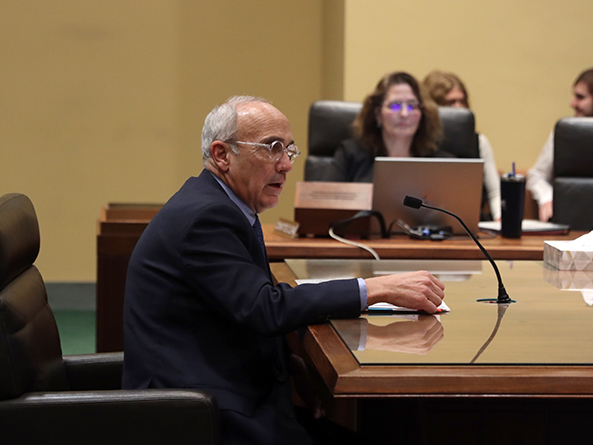
NEST program expansion proposed
A measure that would expand eligible uses of Nebraska educational savings plan trust accounts was considered Jan. 20 by the Education Committee.
LB748, introduced by Elkhorn Sen. Tony Sorrentino, would align Nebraska law with federal changes to 529 plans enacted in July 2025 as part of the One Big Beautiful Bill Act.

Under the bill, families could use NEST accounts for education-related expenses beyond K-12 and postsecondary tuition, including books, tutoring and online instructional materials. The measure also would increase the annual withdrawal cap from $10,000 to $20,000 and expand eligible uses to qualified postsecondary credentialing programs, such as career and technical certifications.
The proposal also would grant the State Treasurer’s Office authority to enter agreements with recognized postsecondary credentialing programs, excluding those related to investment of program funds, and to make payments directly to those programs on behalf of beneficiaries.
Sorrentino said LB748 would ensure Nebraska’s NEST program remains competitive with other states and aligned with federal regulations.
Additionally, he said the measure would expand postsecondary options for Nebraskans who may not wish to pursue traditional two- or four-year degrees, such as obtaining commercial driver’s licenses or studying a trade.
“This expansion benefits blue collar workers, military members and middle class families, not just traditional four-year college students,” Sorrentino said.
State Treasurer Joey Spellerberg testified in support of the proposal, saying it would provide necessary updates to Nebraska’s 529 program while allowing students to pursue a wider range of career paths.
Also testifying in support of LB748 was Jay Steinacher, who oversees Union Bank and Trust’s 529 savings plans. Federal law already allows 529 funds to be used for qualified postsecondary credentialing programs, he said, but because those changes have not been implemented at the state level, Nebraska is at a competitive disadvantage.
“If we want Nebraska’s 529 program to remain strong, modern and competitive, we need to align with national best practices,” Steinacher said. “Expanding qualified expenses to include credentialing is fundamentally about giving Nebraska families the flexibility they need to support the education and career pathways that best fit their children’s goals.”
Tim Royers, president of the Nebraska State Education Association, opposed the measure. There is no pressing need to raise the annual withdrawal cap to $20,000, he said, and doing so primarily would benefit the state’s wealthiest families.
Additionally, Royers said, federal regulations reflecting the recent changes have yet to be written and may take several years to be implemented in Nebraska.
“Let’s just put a pause button on this,” Royers said. “Let’s wait and see what the federal regulations are and develop those practices in the state accordingly.”
The committee took no immediate action on LB748.

