

Bill would require social workers on law enforcement mental health calls
The Judiciary Committee considered a proposal March 27 that would require Adult Protective Services social workers to accompany law enforcement officers when responding to calls involving individuals with mental health concerns.
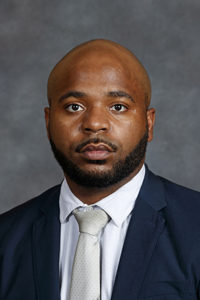
LB706, introduced by Omaha Sen. Terrell McKinney, would require emergency dispatchers to screen incoming calls for signs of mental health-related issues, such as threatening self-harm or severe distress.
Under the bill, if mental health concerns are present, the dispatcher would flag the call as a “mental health priority,” prompting dispatch of an APS social worker alongside an officer. Social workers would be expected to lead these interactions with techniques such as de-escalation measures and trauma-informed care.
The bill also would require the state Department of Health and Human Services to develop and oversee a certification and ongoing training program for APS social workers covering topics such as crisis intervention, trauma-informed care, bias reduction and cultural sensitivity.
Law enforcement agencies would be required to adopt policies for integrating APS social workers into their operations and submit them to the Nebraska Crime Commission, which would set minimum standards and conduct annual compliance reviews. Agencies not in compliance could lose state funding eligibility, and officers who deliberately violate protocols could face suspension or revocation of their certifications.
McKinney said that, despite their best efforts, law enforcement officers do not always have the training and expertise to safely de-escalate sensitive situations. LB706 would address this reality by pairing law enforcement officers with trained social service specialists to calm and stabilize situations, he said, rather than further escalate them.
“This model does not replace law enforcement,” McKinney said. “It brings together safety and compassion in a way that serves both the individual and the broader community.”
An amendment brought by McKinney to the hearing would change the terminology of “APS social worker” to “social service specialists,” which he said would ensure that professionals are not limited to one area of social service.
Jason Witmer testified in support of the bill on behalf of the ACLU of Nebraska, saying similar measures in other states have been successful. For example, he said, Colorado’s co-responder program has effectively diverted individuals from jails and emergency rooms, leading to better outcomes for the community and law enforcement.
“We should not continue to ask the police to be everything to everyone, but rather build community partnerships for everyone’s benefit,” Witmer said.
Omaha resident Mike Lee also supported the measure. He said social services specialists accompanying law enforcement could determine whether an individual is stabilized or faces criminal charges and potentially further harm.
“We cannot keep treating mental health like a public safety issue or nuisance alone,” Lee said. “It’s a public health issue, and when we respond with only force instead of care, we risk further traumatizing vulnerable individuals, especially in Black and brown communities where those outcomes have historically been worse.”
Kearney Police Chief Bryan Waugh testified in opposition to LB706 on behalf of the Police Chiefs Association of Nebraska and the Nebraska Sheriffs Association.
Waugh said co-responder programs are beneficial and that Kearney has seen a 30% decrease in emergency protective custody placements since implementing a co-responder program three years ago.
The proposal could be impossible to implement statewide, however, due to a lack of candidates to fill these roles, he said, especially in rural areas with workforce shortages.
The committee took no immediate action on LB706.

